INTERACTIVE THEATRE
I draw on a reservoir of user-orientated Applied Theatre techniques to customize a program for the client. I base this on
and on how best to proceed with the issues at hand.
The Interactive Theatre techniques are Ideal for
- Education for Behaviour Change;
- Researching issues in
- an organization;
- any community;
- Conferences;
- Events;
- End of Year or any other key Function and event;
- Change management (rollout to scale);
- Lauches;
- Participatory Action Research.
Applied Theatre turning life’s “knocks” into doors opening into realisation of potential.
Or come to a Public Workshop
Receive Invitations
Thank you for subscribing!
Have a great day!

Some of the techniques are:
- Forum Theatre (see below)
- Legislative Theatre is similar to Forum theatre however participants are facilitated further to resolve on principles and/or strategies
- Rainbow of Desire is a reservoir of psycho-social techniques where people explore characteristics of their frustrating interactions with others. Awareness of self & others is enhanced through extremely creative and natural role-play stimulating individual and communal wisdom.
I use any combination of these techniques for small or large group facilitation
The following You-tube video is of a Forum Theatre interactive performance which Manya developed with the rural community of Nkanyakude - it's by water personnel and community members for the International Conference. This conference was facilitated by the Department of Water Affairs investigating
“Water and Sustainability”:
The video clip shows how Forum Theatre works: There is a warm-up before a typical problematic scenario is performed for the audience. The scenario/s show common interactions people consider problematic. When the play’s performed again, any audience member can stop the play and intervene by replacing one of the actors to try to deal with the situation in a more effective way. In fact, as participants intervene again and again, audience members discuss the interventions. Participants access and explore more and more effective options as they gain more and more insight in the synergy of their reflections.
The process is designed in any number of ways to enable a deeper understanding of, and ways to deal with, challenging interactive issues
Personal leadership and effective team building is significantly enhanced
THE Forum Theatre PROCESS:
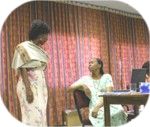
FIRST: THE ORIGINAL INTERACTION
THEN: A series of interventions alternating with discussion where insights are shared by participants
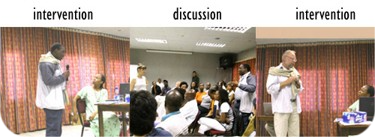
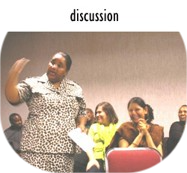
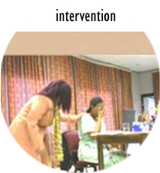
AND SO ON... as people get more involved and the sense of community builds
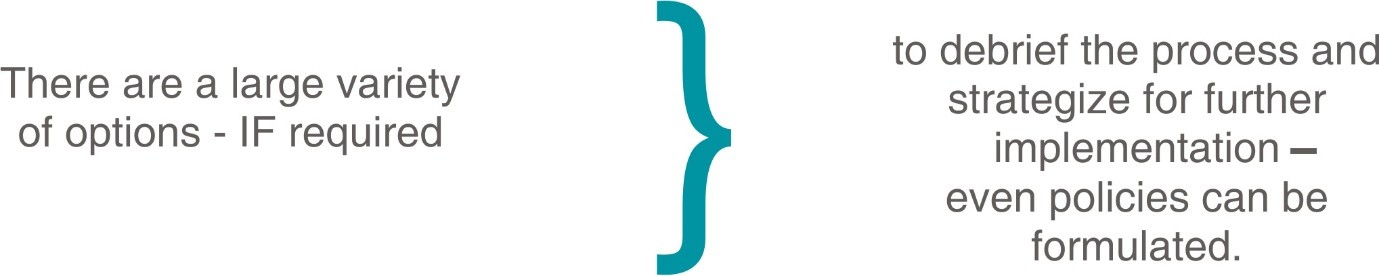
👆These photographs above are records of a process with the
United Nation’s Country Team in Botswana 👆
TESTIMONIAL: This is the Head of the UN's Country Team in Botswana reporting on this Intervention and Interactive Performance:
"The entire UN staff in Botswana went for a retreat. The session 'Exploring new realities in response to HIV & AIDS' under the guidance of Manya Gittel, according to the evaluations by staff, was clearly the most exciting part of the retreat. Thanks to Manya's ability to involve all staff, from the youngest driver to the highest Head of Agency."
Bjoern Foerde -UN Resident Coordinator in Botswana - (he's photographed in the 2nd photograph on an intervention depicted above)
For a Weekly Mail article on a Forum Theatre in the community project click here
ALL THE INTERACTIVE THEATRE PROCESSES ARE BASED ON
THE FOLLOWING MODEL OF HOW WE LEARN AND MAKE PROGRESS IN ACHIEVING OUR GOALS
THERE IS AN UPWARD SPIRAL OF INSPIRATION, INSIGHT, GROWTH & ACCOMPLISHMENT
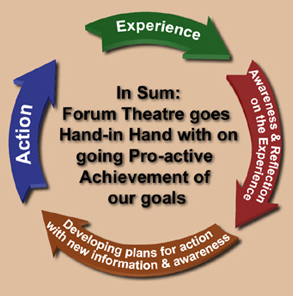
INTERACTIVE THEATRE IS MULTIDIMENTIONAL – IT WORKS SIMULTANEOUSLY ON THESE DIFFERENT LEVELS
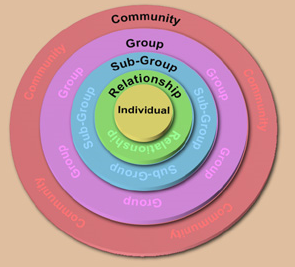
Interactive Theatre enhances both our sense of being an individual with initiative, and our sense of belonging to a group
More reasons why Interactive theatre is so effective:
Interactive Theatre takes account of the fact that:

The Mehrabian Study (1981) established that Communication involves
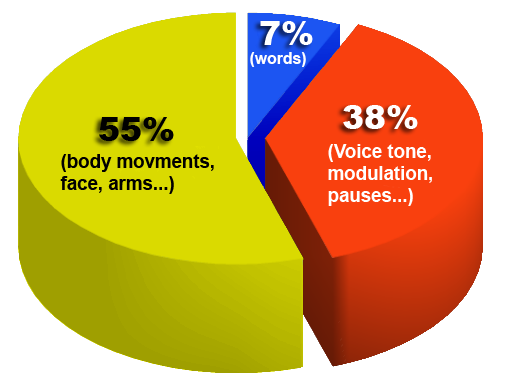
Participants are engaged on all these levels, and become involved and motivated to realise the latent potential in challenging change dynamics and problems they experience.
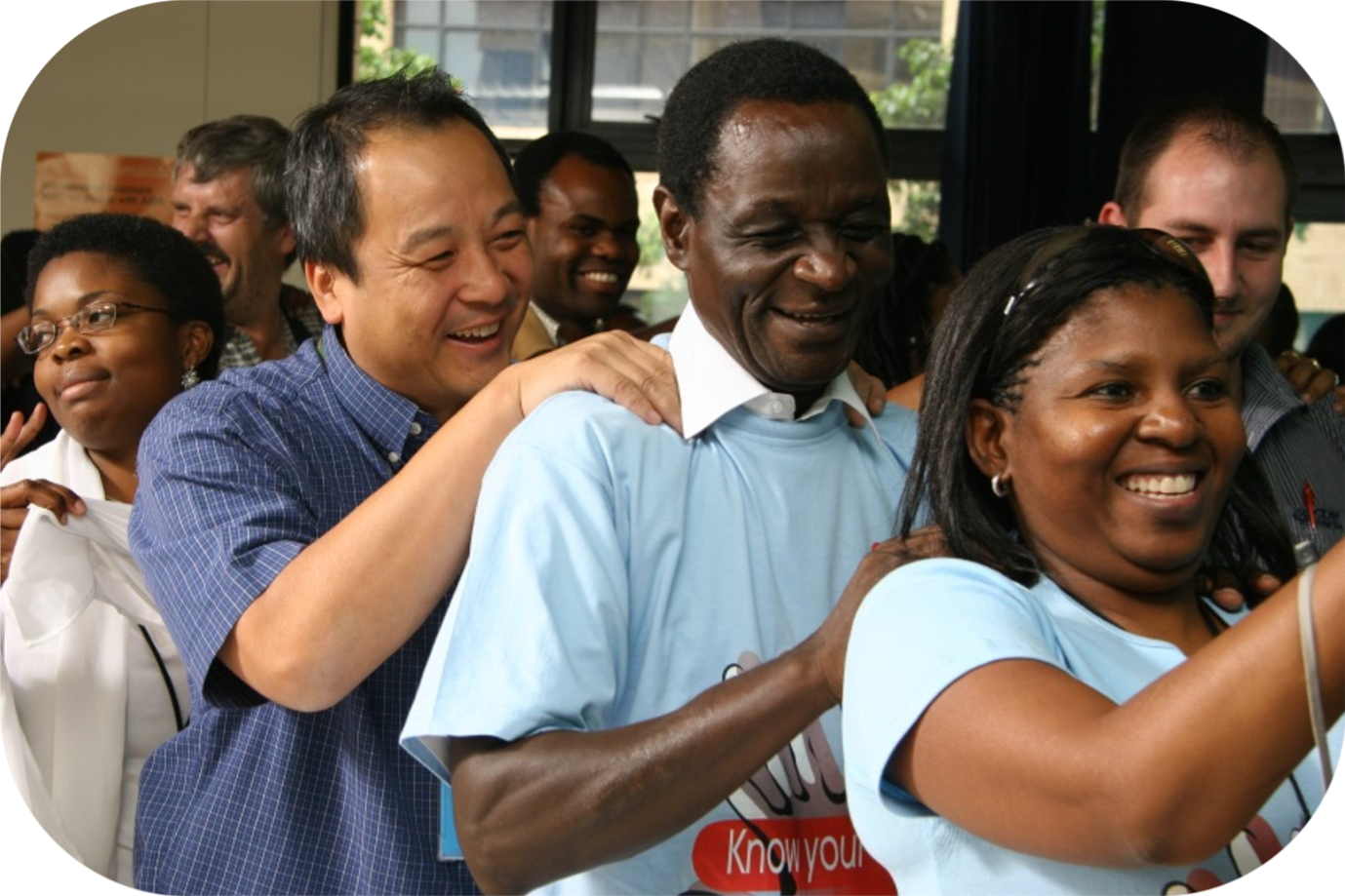
All sorts of adaptations are possible: For example, I was Workshop Facilitator, Team Coach, involved in design & content development for both the 1st and the 2nd 13-Part series (26 episodes in total) of SABC2’s “Drawing the Line” (on Ethical/Moral Dilemmas) - Nominated for Best Game Show.
A selection of techniques, and debriefing methods and processes are integrated and incorporated into the program tailored to clients’ needs and desired outcomes